Specialist Programs

One of the many things that sets MUSE Global School apart from other private schools, is our specialist programs and elective courses available to all students. These are what spark creative thought and provide an outlet of nature and imagination that students of all ages crave.
Seed-to-table and Program
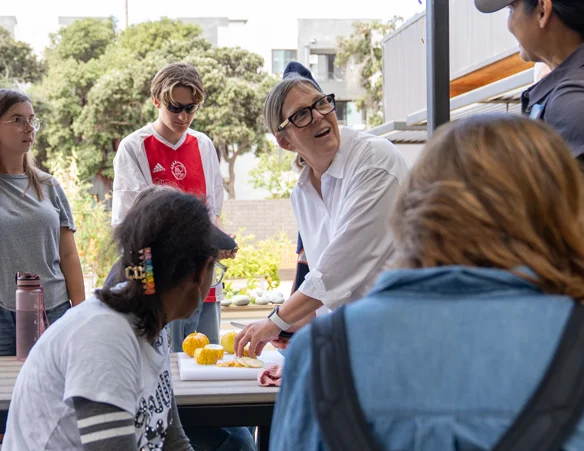
The Seed-to-Table program is an experiential curriculum that leverages our urban Santa Monica environment to teach regenerative practices, food justice, and plant-based nutrition.
Students engage with the full food cycle as a reflection of urban sustainability:
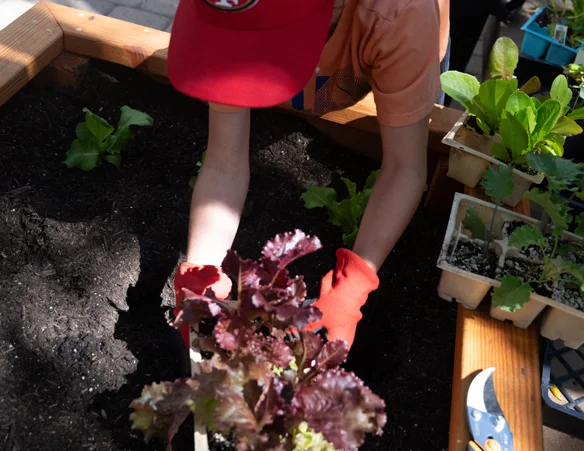
Growing & Community: We use our garden boxes for essential learning, involving students in the entire growing process, from seed to harvest. We connect with the community by regularly visiting local gardens to study food security and efficient growing techniques.
Zero-Waste: Our school actively explores community composting programs. All kitchen scraps are composted, teaching students about local resource recovery and zero-waste initiatives.
In 2019 MUSE Seed to Table Program added an aquaponic and hydroponic system to its campus. Students learn every aspect of caring for these systems including monitoring ph, nitrate, and phosphorus levels, controlling nutrients, and caring for the fish. These systems expose students to one possible element of the future of farming while also teaching valuable lessons in chemistry and biology.
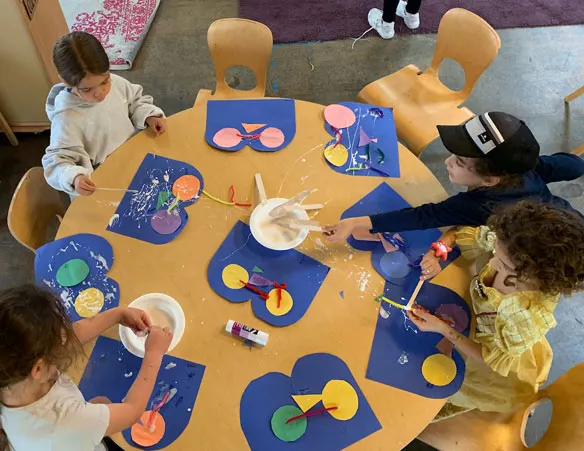
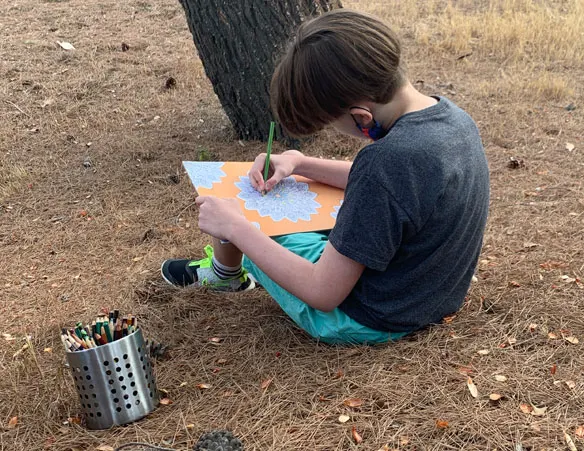
The MUSE Global School Visual Arts curriculum guides students from Kindergarten through High school in developing a strong foundation in artistic fundamentals and creative expression. As their skills progress, students explore a wide range of techniques and mediums while cultivating their own artistic values and ideas. Classes emphasize reflection and observation, not only of how art has been created across cultures, but also of the work of contemporary artists in mural, graffiti, and street art movements, as well as the influence of Japanese animation.
Beginning in middle school, students may also apply to join our international visual arts trips which are week-long immersive experiences in global art and culture. Past journeys have taken students to Tokyo, Japan; Florence, Italy; and Barcelona, Spain.
The program provides real-world skills and serves as a cross-curricular teaching laboratory:
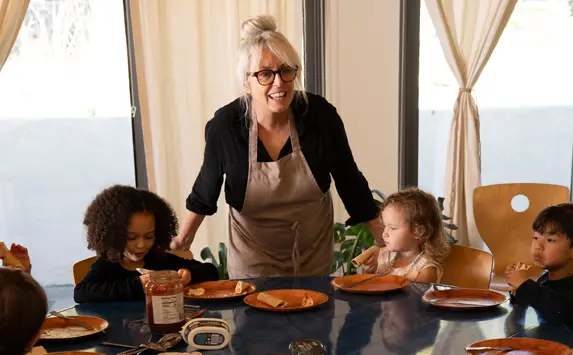
Local Sourcing: Students visit the Santa Monica Farmers Market to meet farmers, learn about seasonal produce, and make purchasing decisions for the MUSE Global School kitchen. They then work with our Head Chef in plant-based cooking classes to prepare eco-conscious meals.
Science & Humanities: Garden boxes are springboards for Science lessons on soil chemistry and ecosystems. The program connects to the Humanities by exploring ancient agriculture and the history of food systems.
Literacy: Students practice descriptive and analytical writing by keeping scientific field journals that combine data with reflective writing on food ethics and culture, using this material for essays and creative projects.
In 2019 MUSE Seed to Table Program added an aquaponic and hydroponic system to its campus. Students learn every aspect of caring for these systems including monitoring ph, nitrate, and phosphorus levels, controlling nutrients, and caring for the fish. These systems expose students to one possible element of the future of farming while also teaching valuable lessons in chemistry and biology.

At MUSE Global School, all students have the opportunity to participate in our specialized French and Spanish programs. We offer an immersive, hands-on cultural experience that brings language learning to life.
Our curriculum is thoughtfully designed to grow with our students. For our early learners, we focus on speaking and vocabulary development. As students move into middle and high school, the program deepens to include reading, writing, and rich cultural exploration. Our approach goes far beyond traditional classroom instruction. Through a combination of in person and virtual trips, students explore Francophone and Spanish speaking countries while practicing real world language skills. They are encouraged to use the language both inside and outside the classroom, which builds confidence and fluency in meaningful ways.
World language classes at MUSE Global are highly interactive and often conducted in small groups, allowing teachers to connect with students one-to-one. Lessons are fun, playful, dynamic and engaging, filled with games, music, songs, plays, videos, books, and magazines. We take learning into the community, where students apply their skills in real life situations, such as ordering food at a local restaurant or participating in a themed scavenger hunt. These experiences make language learning exciting, memorable, and relevant.
“Because MUSE serves as a beacon of sustainable living and design, students are engaged and motivated in so many areas: academics, communication, creativity, confidence, health and wellness (and more). I am thrilled that MUSE is sharing this with others worldwide!”
— Elliot Washor, EdD, cofounder of Big Picture Learning

Start your child’s amazing journey — contact us to learn more about MUSE Global today.


